Platelet-rich plasma (PRP) is one of the most heavily marketed hair-loss treatments in the United States, and one of the hardest to evaluate as a patient. The published research is not empty — but it is also not what the average consultation makes it sound like. This guide covers androgenetic alopecia specifically: male pattern and female pattern hair loss.
This is information, not medical advice. Decisions about your own hair loss belong with a physician who has examined your scalp.
The short version
Most controlled studies of PRP for pattern hair loss report a measurable increase in hair density over three to six months. The size of that increase is modest — commonly in the range of roughly 15 to 30 additional hairs per square centimeter, against a normal scalp density of about 200. The studies are small, the injection protocols differ from clinic to clinic, follow-up is short, and blinding is often imperfect. Benefit appears to fade without repeat sessions. And PRP is not FDA-approved for hair loss.
That combination — probably does something, unclear how much, unclear how long, expensive and ongoing — is the honest summary.
What PRP is, and what "not FDA-approved" means here
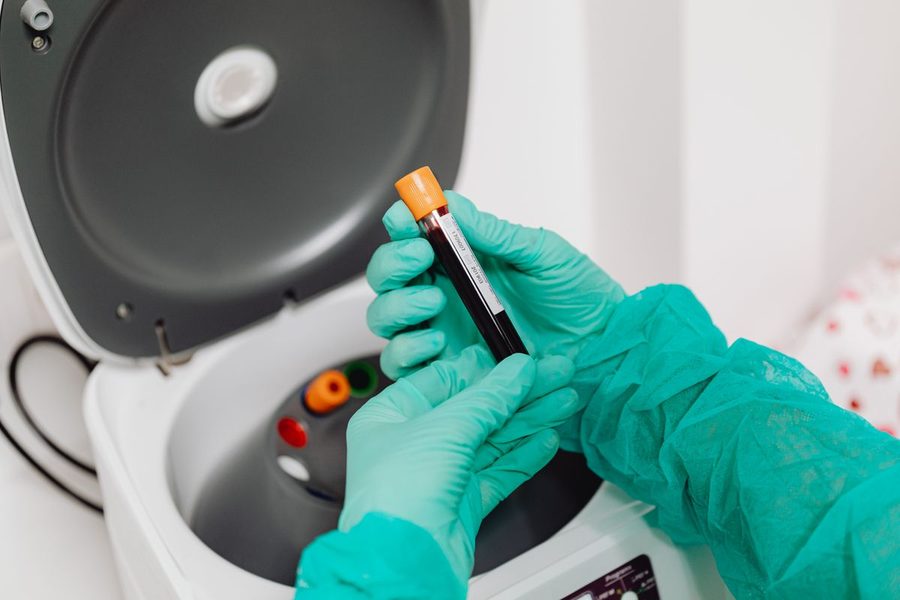
PRP is made from your own blood. A tube is drawn, spun in a centrifuge to concentrate platelets, and the resulting plasma is injected into the scalp. Platelets carry growth factors, and the working theory is that these signal dormant or miniaturizing follicles back toward a growth phase.
The FDA has cleared various centrifuges and kits as devices for preparing platelet-rich plasma. It has not approved PRP as a treatment for androgenetic alopecia. No PRP product has gone through the drug-approval process for hair loss, which means no manufacturer has had to demonstrate efficacy and safety for this indication to the agency's standard.
What that does mean: the treatment is legal, widely offered, and prepared from your own tissue, but nobody has independently verified the claims made for it. What it does not mean: that PRP is dangerous or fringe. Plenty of accepted medicine is used off-label. It does mean the burden of evidence falls back on published studies rather than a regulatory review, and the FDA has repeatedly cautioned consumers that products marketed under the "regenerative medicine" banner are frequently promoted beyond what the evidence supports (FDA consumer information on regenerative medicine therapies).
What the studies actually show
There are dozens of small randomized and split-scalp trials, plus several meta-analyses pooling them. You can browse the body of work yourself on PubMed.
The general pattern across this literature:
- Direction of effect is mostly positive. The majority of controlled trials report greater hair density in PRP-treated scalp than in saline-injected or untreated control areas at three to six months.
- Magnitude is modest. Pooled estimates in published meta-analyses typically land somewhere between about 15 and 30 hairs per square centimeter of gain. On a scalp with a normal density near 200 hairs/cm², that is a change in the neighborhood of 10 to 15 percent in treated areas — often visible in trichoscopy measurements, sometimes visible in photographs, and not always visible to the patient in the mirror.
- Hair thickness sometimes improves too, which can matter more for perceived coverage than raw count.
- A minority of trials find no significant difference. These exist and are not rare enough to dismiss.
Why study quality caps how confident anyone can be
Four problems recur:
Sample sizes are tiny. Many trials enroll 20 to 40 people. Small trials overestimate effects when they find them, and miss real effects when they don't.
There is no standard PRP. Platelet concentration, whether white blood cells are included, whether the platelets are chemically activated, the number of centrifuge spins, injection depth, volume, and session spacing all vary between studies. Two clinics can both offer "PRP" and deliver preparations that differ several-fold in platelet count. This is the single biggest reason results from a published trial may not transfer to the treatment you are being sold.
Split-scalp designs have a built-in flaw. Treating one half of the head and using the other half as control is efficient, but growth factors may not stay strictly local, which can blunt the apparent difference. Meanwhile, patients and sometimes assessors know roughly what is going on, which pushes the other way.
Follow-up is short. Six months is typical. Twelve months is uncommon. Longer than that is rare. So the durability question is essentially unanswered by high-quality data.
By contrast, the evidence base for topical minoxidil in pattern hair loss has been assessed in systematic reviews including Cochrane's review of interventions for female pattern hair loss, and both minoxidil and oral finasteride have FDA approval for this indication, meaning they cleared a regulatory efficacy bar PRP has not attempted.
The maintenance requirement
This is the part most often underplayed at the consultation, and it changes the arithmetic completely.
PRP does not stop the underlying process. Androgenetic alopecia is driven by genetics and androgen sensitivity, and nothing in a PRP injection alters that. Typical protocols involve an induction series — commonly three or four sessions spaced four to six weeks apart — followed by maintenance every three to six months, indefinitely.
The limited follow-up data suggest gains regress when treatment stops, which is consistent with how the treatment is thought to work. If you are budgeting for PRP, budget for years of it, not for a course.
Safety
Because PRP is autologous, the risk profile is comparatively benign. Reported side effects are mostly procedural: injection pain (scalp injections hurt more than most people expect), transient swelling, redness, pinpoint bleeding, headache, and temporary tenderness. Infection is uncommon with sterile technique. There is no meaningful body of evidence pointing to serious systemic harm.
The real risk for most patients is financial and temporal — money spent, and months spent not pursuing a treatment with better-established benefit.
What it costs
Per-session pricing in the US generally falls somewhere in the range of a few hundred dollars to roughly $1,500, with an initial series often totaling $1,500 to $4,000 and annual maintenance adding to that. Insurance does not cover it; pattern hair loss is treated as cosmetic. Prices vary with region, preparation system, and whether the practice bundles in microneedling or topical adjuncts. Our separate guide on PRP pricing goes into why the spread is so wide.
Who is a reasonable candidate
The patients most likely to see something are those with early to moderate pattern loss, where follicles are miniaturizing but still present. PRP cannot regrow hair from scalp where follicles are gone; a smooth, shiny bald crown is not going to respond, and any provider suggesting otherwise is overselling.
Evidence in women with female pattern hair loss is thinner than in men, though the mechanism is not obviously different. Anyone whose hair loss might be something other than androgenetic alopecia — telogen effluvium, thyroid disease, iron deficiency, a scarring alopecia, autoimmune disease — needs a diagnosis before injections, not after.
PRP is also frequently used alongside minoxidil or finasteride rather than instead of them. That is the more defensible framing: an add-on to proven therapy for someone who has plateaued, not a replacement for it.
Questions worth asking before you pay
- What system do you use, and what platelet concentration does it produce relative to my baseline?
- How many sessions in the initial series, and what maintenance schedule do you expect?
- What will you measure, and when — standardized photographs, trichoscopy, hair counts?
- What is your definition of non-response, and at what point would you tell me to stop?
- What am I paying, all-in, for year one and for year two?
A provider who can answer the fourth question without discomfort is a good sign.
Bottom line
PRP for androgenetic alopecia sits in an awkward middle: better supported than most things marketed as regenerative, considerably less supported than the two drugs the FDA has actually approved for this condition. If you go in expecting a modest density improvement, an ongoing cost, and a real chance of no visible change, you are calibrated correctly. If you have been told to expect dramatic regrowth, you have been told something the literature does not support.