Androgenetic alopecia — male and female pattern hair loss — is the most common cause of chronic hair loss, and affects up to 80% of men by the age of 70. There are few approved treatments for it, and the ones that exist show modest results. That gap is why platelet-rich plasma has become one of the most heavily marketed hair-loss treatments in the country.
So it is worth being precise about what the published evidence actually shows, and where it stops.
What PRP is
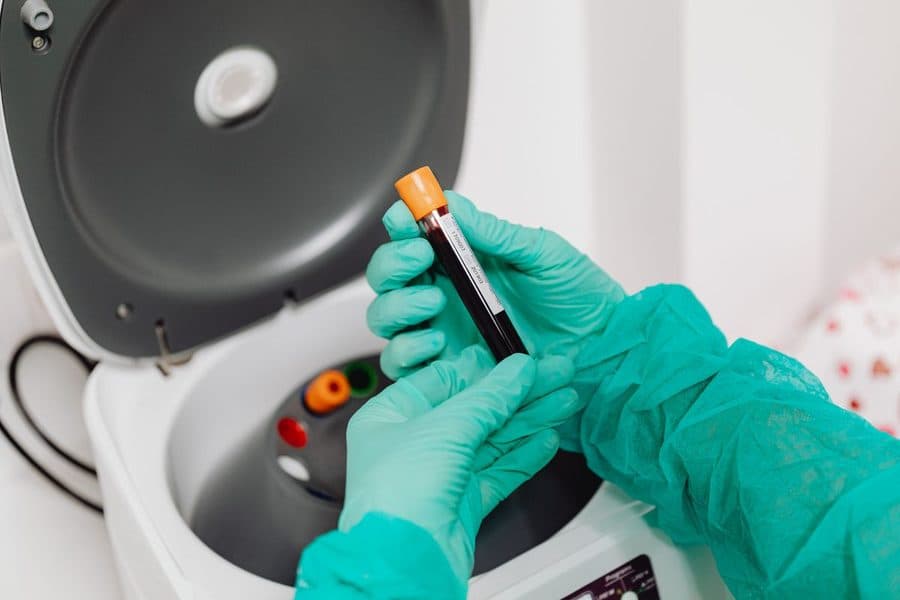
PRP is made from your own blood. A clinician draws a sample, spins it in a centrifuge to concentrate the platelets, and injects that concentrate into the scalp. Nothing is added from a donor or a laboratory.
That makes it different from the stem cell and exosome treatments often advertised alongside it. PRP is not a stem cell therapy, and the two should not be judged by the same evidence.
What the research shows
A 2024 systematic review in the Journal of Cosmetic Dermatology pooled eight randomised controlled trials and one cohort study — 291 participants in total — looking at PRP for male pattern hair loss. Six of those studies reported a statistically significant increase in hair density compared with a control, and five reported a significant increase in hair count.
That is a genuinely encouraging direction. The authors' own conclusion is more restrained: PRP "demonstrated some potential to be used therapeutically", but the finding is limited by low quality of evidence, moderate risk of bias, and high variation between studies. Seven of the nine studies carried a moderate risk of bias; only two were rated low.
A 2025 review in Cureus reached a similar place, describing PRP as "a viable therapeutic option for AGA, particularly for increasing hair density and thickness", while noting that results across studies are inconsistent.
The part that matters most: there is no standard protocol
This is the single most useful thing to understand before you book anything.
The 2025 review found that studies differ in nearly every variable that could plausibly matter:
- how the blood is spun, and the resulting platelet concentration
- whether the platelets are activated before injection
- how it is delivered — microneedling versus point-by-point injection
- how many sessions are given, typically between three and six
- the interval between sessions, and how long patients are followed afterwards
Its authors put it plainly: the "lack of standardization in PRP preparation protocols confounds the comparison of results across studies."
The practical consequence is uncomfortable but honest. "PRP" is not one treatment. Two clinics can both truthfully say they offer PRP for hair loss and be doing measurably different things. Evidence that one protocol worked in a trial does not automatically transfer to a different protocol down the road.
Is it FDA-approved?
We are not able to point you to an FDA document that addresses PRP for hair loss specifically, and we would rather say that than imply an approval that we cannot show you.
What the FDA does publish is consumer guidance on regenerative medicine therapies, which is mostly concerned with stem cell and tissue-derived products. It states that the only stem cell products currently FDA-approved in the United States are blood-forming stem cells derived from umbilical cord blood, and that other regenerative medicine products marketed to consumers require FDA licensure or approval — with FDA oversight in a clinical trial before that approval.
If a clinic tells you a stem cell or exosome treatment for hair loss is FDA-approved, that claim is worth checking carefully.
Questions worth asking a provider
Because protocols vary so much, these are the questions that actually distinguish one clinic from another:
- How many sessions do you recommend, and over what period?
- What is your preparation method, and do you activate the platelets?
- Do you inject directly, or use microneedling?
- Do you measure hair density before and after, and how?
- What do you tell patients who see no change?
A provider who can answer these specifically is describing a protocol. One who cannot is describing a product.
What this guide is not
This is not medical advice, and it is not a recommendation to have PRP. It is a summary of what the published reviews say, with their limitations left in rather than edited out. Hair loss has several causes, not all of which respond to the same treatment, and only a clinician who has examined you can say what is going on with yours.
If you decide to look into it, you can browse verified PRP hair restoration providers — every listing cross-checked against the CMS national registry, so you at least know the person named on the page is who they say they are.